Minneapolis Shooting: Self-Defense Doesn’t Look Like That
It was murder

Start with the evidence we actually have: the bystander video. It is the rare use-of-force controversy where the key question is not “what happened?” but “why are some officials insisting the obvious didn’t occur?”
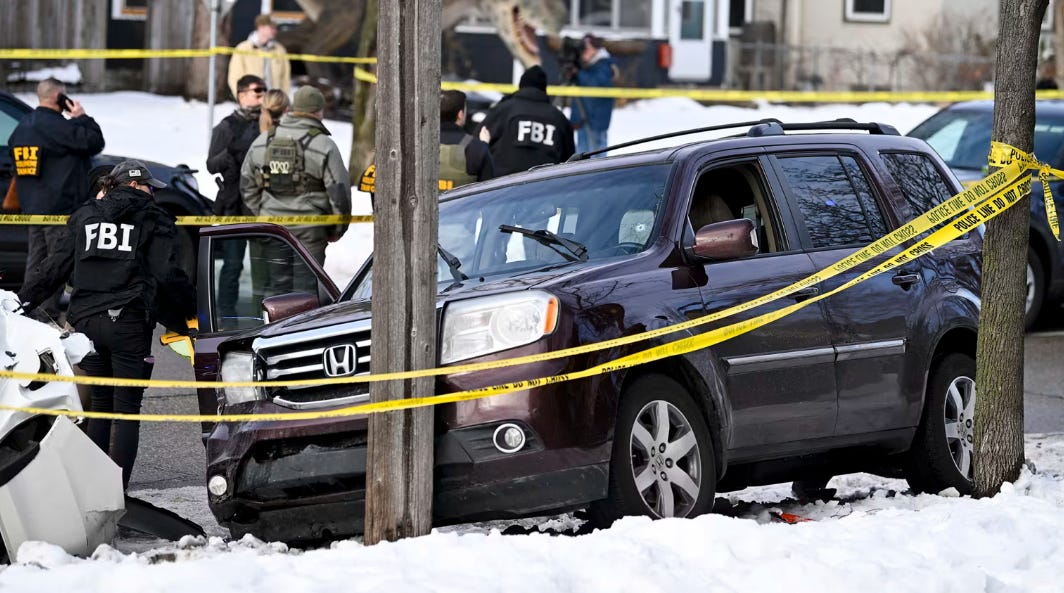
On January 7, a federal immigration officer shot and killed Renée Nicole Good, 37, in south Minneapolis during an ICE operation. Federal leaders rushed to one familiar conclusion: self-defense. They went further, branding the incident “domestic terrorism.” Local and state leaders, who watched the same footage as everyone else, said, in substance: no.
Here is what makes “self-defense” such a hard sell on the video record as reported and analyzed so far: the car is moving, yes, but the officer is able to step aside, and then fires from the side as the vehicle veers away. That matters because self-defense is not a vibe. It is a requirement of imminent threat. If you can move out of the path, and then shoot as the threat is passing, you are no longer describing defense. You are describing a choice to kill.
Use-of-force experts are saying the quiet part out loud: shooting at moving vehicles is broadly condemned in policing practice precisely because it turns “possible danger” into “certain death,” often when the officer had safer options. One expert called this a violation of basic tactics, because the officer did not appear to be in immediate danger when the shots were fired.
Now add one more fact that should make any lawyer sit up: the investigation itself is being structured to avoid scrutiny. Minnesota’s Bureau of Criminal Apprehension says the FBI cut it out of meaningful access, prompting the state agency to withdraw. After George Floyd, state and federal investigators worked jointly. Here, the federal government is choosing solitude. That is not how you build legitimacy; it is how you spend it.
So what is the right frame? Not “tragic split-second decision.” Not “everyone has their own truth.” If the public video record is materially accurate, then this was an unjustified homicide. In plain language: murder, not self-defense. That is not a slogan. It is a claim about legal elements: an intentional killing without lawful justification, supported (at least preliminarily) by the sequence of movement and shots. The point is not that video is always dispositive; it is that officials do not get to wave it away when it is inconvenient.
Even conservative (turned Democrat) lawyer George Conway, hardly a figure from the abolitionist left, called it “murder” and urged prosecution.
Why this moment matters: because “self-defense” is the all-purpose solvent. If it dissolves the boundary between imminent threat and anger, between moving out of harm and firing anyway, then deadly force becomes a narrative weapon. And when the same officials who narrate the killing also control the investigation, the rule-of-law problem is not downstream. It is the story.
The bottom line is simple: the public deserves a real accounting anchored to the video, not to talking points. Release the full, unedited footage. Preserve the scene. Allow independent participation by state investigators. And treat this as what it appears to be: a killing that should be investigated and, if the evidence holds, charged as murder.